← Home

Shipping a game, then measuring it.

KILL SWITCH is a fast free-for-all shooter on Roblox that I designed, directed and shipped. This case study is about what came after: measuring what new players actually do, and deciding what to fix.

Role
Sole developer, AI-assisted
Status
Public beta since 25 Nov 2026
Platform
Roblox · PC, mobile, console
Tools
Roblox Studio · Luau · Blender · FL Studio

At a glance

What it is

A free-for-all shooter with five-minute rounds, three maps, three guns and four abilities. Respawns take about three seconds and bots keep every server busy.

What I did

Wrote the design, made the gameplay and art calls, co-produced the music, playtested every system, and decided what shipped. AI tools wrote most of the code from my specs.

What stands out

An onboarding funnel with real players, a light show choreographed to our own song, and a skin-wear system Roblox doesn't provide.

What I learned

Shipping is the start, not the end. The useful work began when real players showed me where the game was losing them.

Data-driven development

Understanding why players stay

When the public beta launched, I had an onboarding funnel built into the game to see how far new players get in their first session, and where they stop.

Early beta onboarding funnel

New players only, each step counted once. First published build with analytics, 25 Nov 2026.

  1. Reached the main menu101100%
  2. Deployed into a match7675%
  3. Got a first kill6059%
  4. Round finishedovercounts, see below3232%
  5. Opened the shop1717%
  6. Opened a first crate88%

Reading it: percentages are of the 101 who reached the menu; of those who deployed, 79% got a kill. "Deployed" means the character spawned. Kills on bots count, and free crates count. Each step is counted once per player, not strictly in order, so a player could open the shop without deploying.

Sample: 101 new players from the first days of the public beta. That's small: a 75% rate from 101 players has a margin of roughly ±8 points (95% interval), so only large differences mean much.

Limits: Roblox's funnel tool can't split by device, so device comparisons come from separate session events. A desktop-only ad campaign started the same day, so this audience may not represent players who find the game other ways. The two earliest funnel steps (profile loaded, intro finished) are left out for clarity.

Observation

A quarter of new players reached the menu and never deployed into a match. Most who did deploy got a kill, but far fewer finished a round, and only a handful found the shop or opened a crate.

Hypotheses

  • The first step was too hard. On an empty server, a new player saw "WAITING FOR PLAYERS · PICK A MAP" and needed three actions, with no timer, to start a match.
  • Rewards were hidden. Players earn enough for the Shotgun in their first round, but the rewards sit in a CONTRACTS screen a new player might never open.

Investigation

  • 27 Nov: I had the AI audit every event against the code. It found a bug in my own measurement: "Round finished" fired for everyone in the server, including players who sat in the menu all round. The real completion rate is lower than 32%. The same bug gave idle players contract progress.
  • An economy model built from the game's config tested the "too slow" theory. It suggests early progression is fast, which points to discoverability instead. That's an inference: the model assumes about 25 kills a round, mostly against bots, not measured player data.
  • New session events now record time to first spawn, how long players stay (30 s, 1, 3, 5, 10 min), input method, frame rate and where players leave.

Response

  • Shipped 25 Nov A quick response to the first funnel: one-press DEPLOY on empty servers picks a map and starts the match. Tested in Studio with one player: from button to fighting in about 1.8 seconds.
  • Shipped The session events above, split by device and new or returning player.
  • Built · not live yet A round now only counts when the player was active for at least 30 seconds, which fixes both the funnel step and the idle rewards. Tested in the development copy of the game.
  • Built · not live yet Four more events: first engagement, first unlock, first customization and second round.
  • Idea Gentle hints toward unclaimed rewards, if the new events confirm players miss them.

Evaluation

Success means the menu-to-deploy rate rising clearly above the 75% baseline for builds after the change, compared by game version and by device, because the ad campaign changed who was arriving. With two samples of about 100 players, a difference under about 12 points could just be noise, so I need either a large change or a few hundred players per build before calling it.

Not yet measured There isn't enough post-change data yet, so I'm not claiming an improvement.

How I worked with AI

AI wrote a lot of the code. Judging it was my job.

I used an AI coding assistant (Claude) for most of the Luau code, Blender scripts and analysis, and ChatGPT for planning, design reviews, briefs and some concept images. AI output isn't automatically right: several problems on this page were bugs in AI-written code that only showed up when I tested the game.

What I was responsible for

  • The design: what the game is, how it should feel, what ships.
  • Specs and briefs for each system, and the gameplay and balance decisions.
  • Playtesting, describing exactly what felt wrong, and rejecting results that weren't good enough.
  • Approving anything that touched the live game or player rewards.

What AI helped with

  • Writing most of the Luau code and Blender scripts from those specs.
  • Running analysis scripts and proposing fixes and test plans.
  • Keeping a detailed development log of every change, test and backup.

Example · debugging

The music visualizer was 3.67 seconds late

While playtesting the main menu, I noticed the spectrum bars were reacting about three seconds after the music.

The tempting fix was to nudge the timing by ear. Instead we looked for the cause. The visualizer reads precomputed frequency data, and that data had been analysed from a different export of the menu loop than the one the game plays. The two files were the same song, started 3.67 seconds apart.

The AI assistant confirmed this with a cross-correlation between the analysis and each audio file (a strong match at +3.67 s), and separately with Roblox's own audio analyzer, which put a quiet dip in the playing track at 32.4 s, matching the shifted file. The fix applies the offset in one place, so nothing gets shifted twice.

What I took from it: when something is off by a suspiciously exact amount, find out why before tuning it. A guessed offset would have looked right and hidden the real problem.
Example · design

Simplifying the Locker as the inventory grew

Every new feature (duplicate skins with different wear, knife types with their own finishes, calling cards, kill effects) made the Locker harder to use, especially on phones.

  • Two sections only: Loadout and Collection, with one main button that changes with the item's state (equip, swap or unlock).
  • Duplicates grouped into one tile, with exact copies listed only when asked. Selling sits behind a confirmation that names the exact copy.
  • On phones, the category list became a button that opens it, so the weapon gets the full width.
  • My calls during review included cutting a redundant "browse all weapons" row and a separate "all skins" entry, and making cross-weapon browsing the default view.
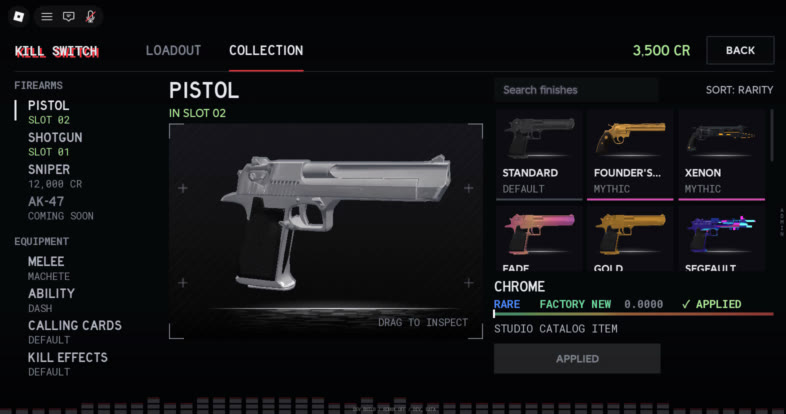
Earlier phone Locker: a permanent category list takes up the left third of the screen
Before: the category list always takes a third of a phone screen.
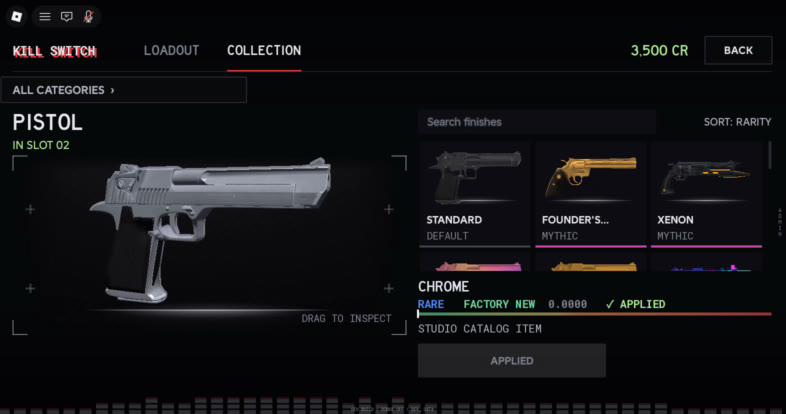
Revised phone Locker: categories behind an ALL CATEGORIES button, the weapon uses the full width
After: categories open from one button and the weapon gets the space.

Maps

Three maps, three different feels

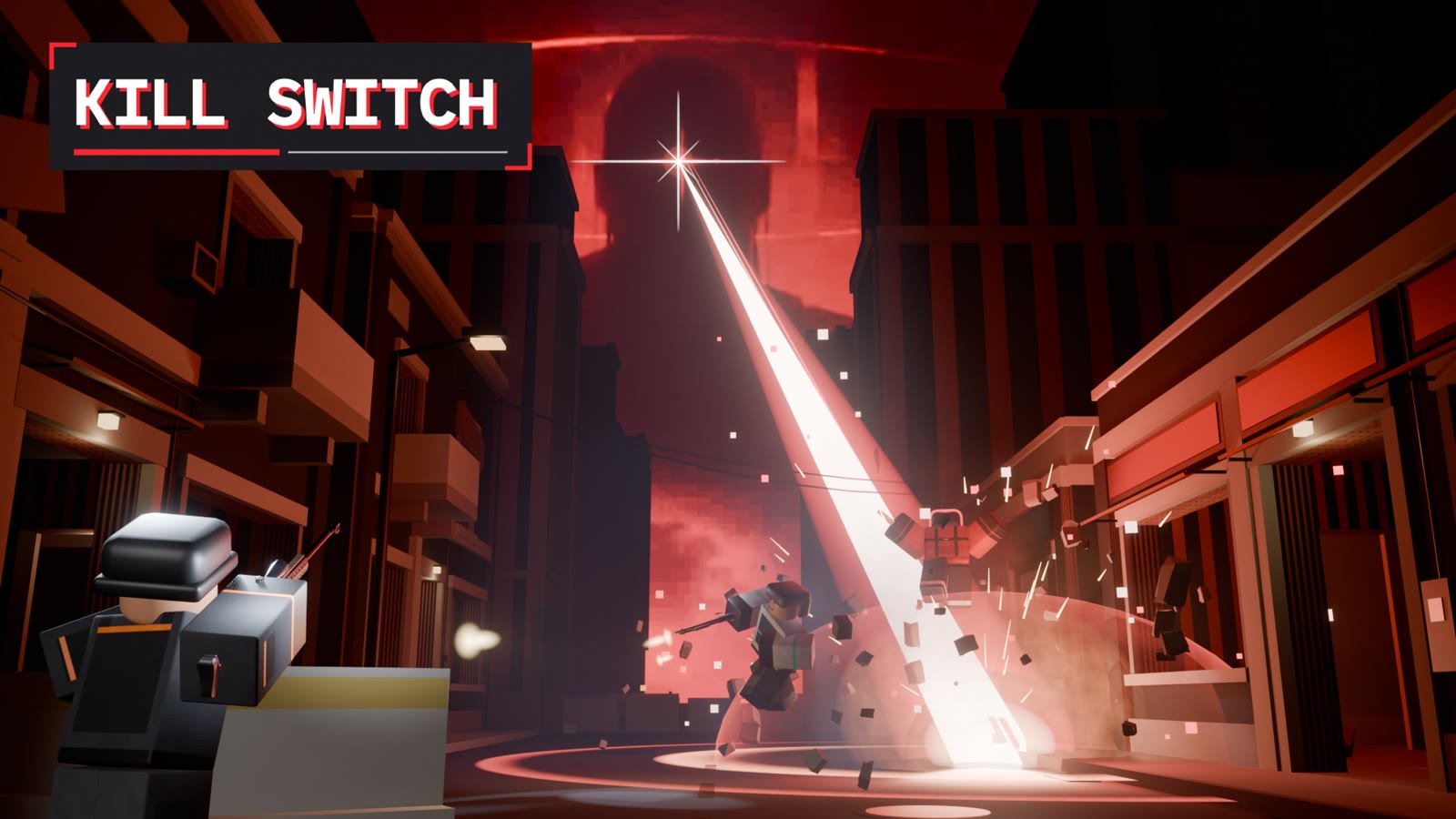
DEADLOCK key art: a giant figure fires a red beam into a city street while players fight

DEADLOCK

City streets under a red sky. A giant figure watches the fight and fires into it, and the whole map can go dark mid-round.

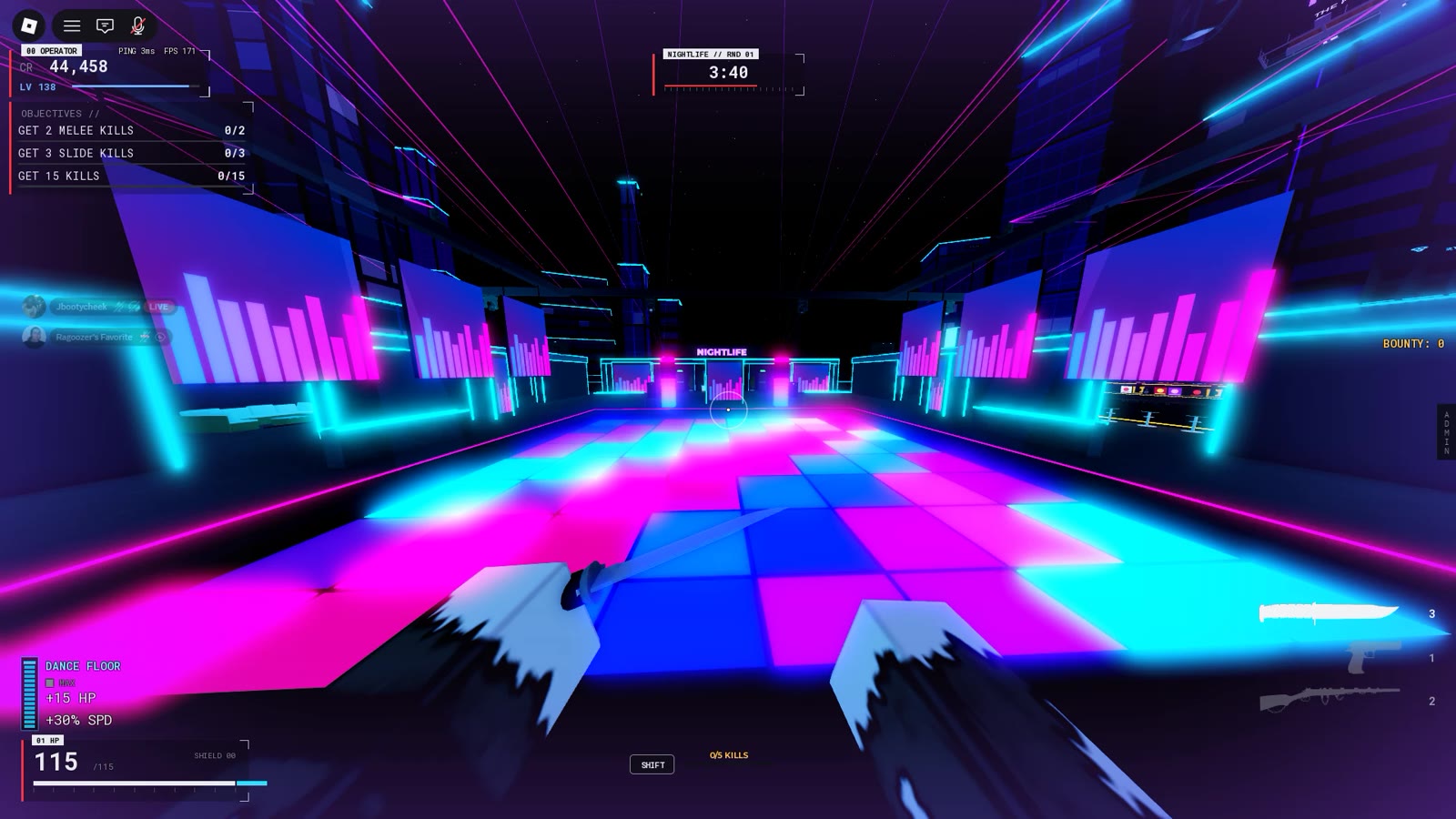
NIGHTLIFE gameplay: a glowing dance floor under lasers and music visualizer screens

NIGHTLIFE

A nightclub where every match happens in the middle of a full light show, choreographed to our own song.

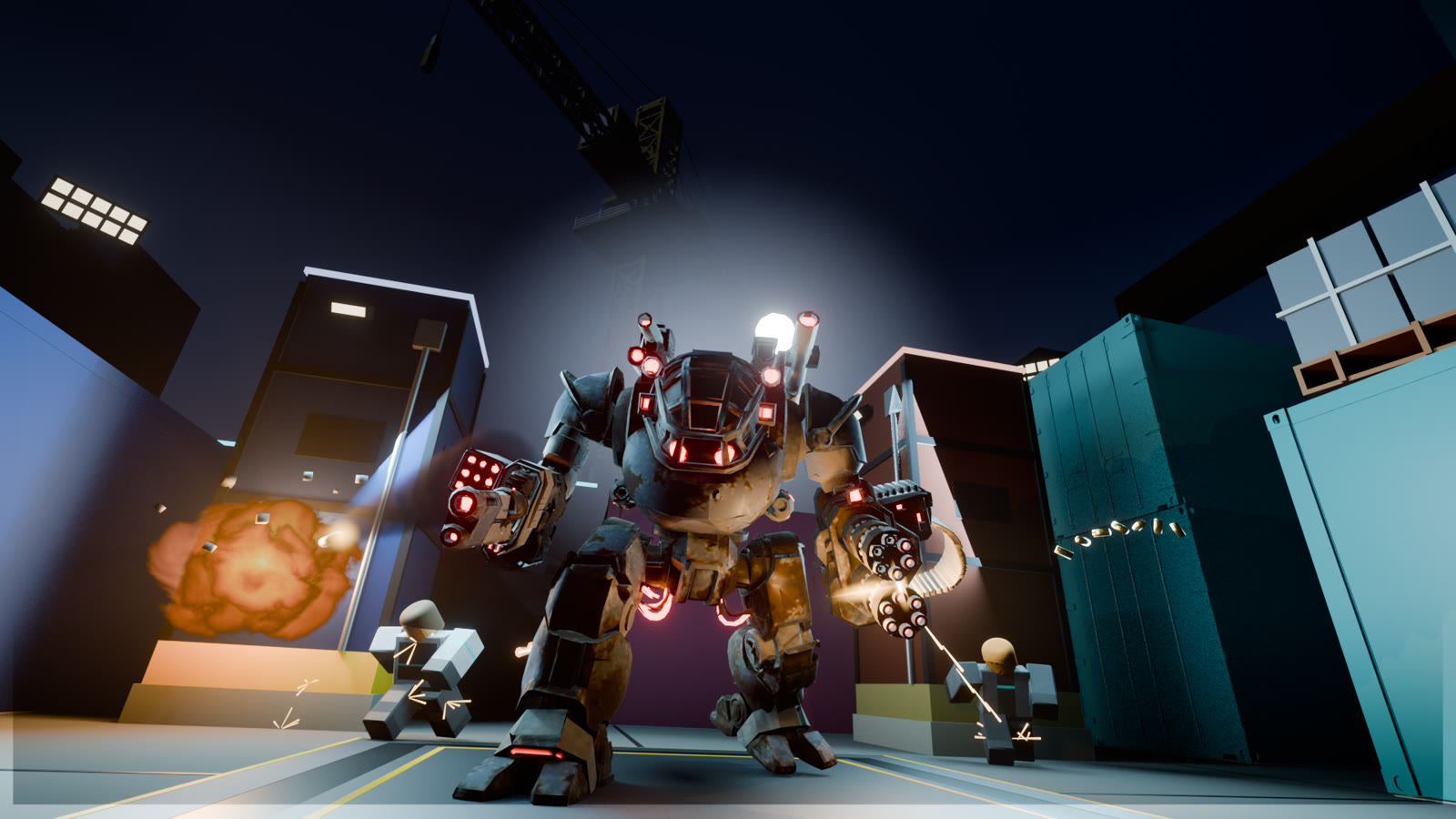
MANIFEST key art: a giant mech walks through a shipping yard as players fight around it

MANIFEST

A shipping yard at night. Containers make tight lanes for close fights and long lines for snipers. During its event, a giant mech walks in mid-match.

Music & creative technology

A concert on the battlefield

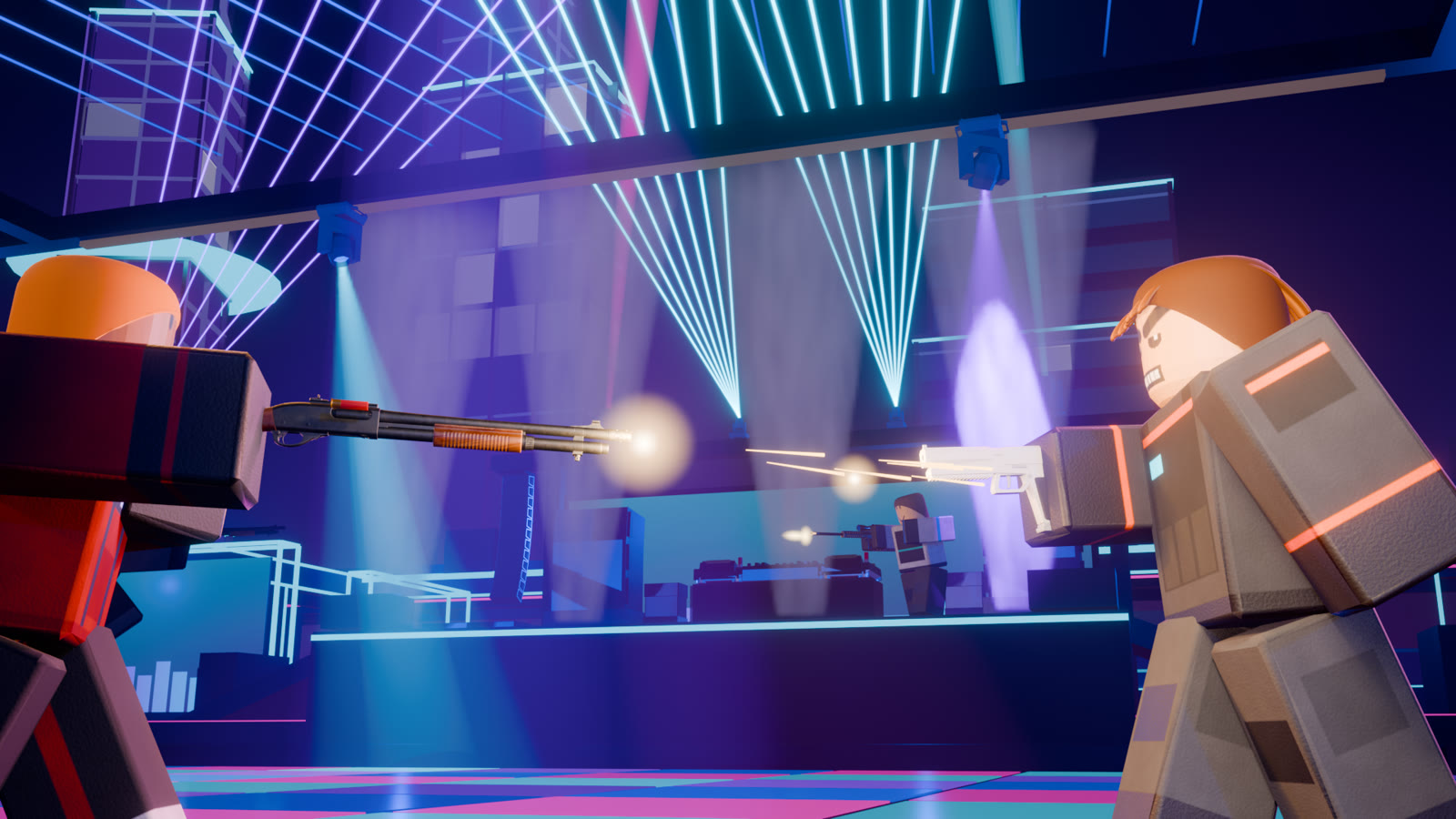
Two players trading shots under NIGHTLIFE's lasers and spotlights

A friend and I co-produced the game's two original tracks in FL Studio: the menu theme and the NIGHTLIFE song. NIGHTLIFE was designed so the music drives the room, not just plays in it.

The show isn't live audio analysis. The song was analysed ahead of time: the lead synth's notes from its own stem, plus the bass hits and the beat. Bigger moments like drops, risers, filter sweeps and the half-time section were read straight from our project's own tracks.

How the timeline works

  • All cues merge into one timeline with priorities: blackouts first, then drops, bass hits and beats.
  • It's capped at three flashes a second, so it never becomes a strobe.
  • The server owns the song clock and players follow it, so the show stays in sync even after you respawn.

Music as gameplay

  • The lights hit on the bass, the lasers follow the lead synth, and the club goes dark when the song drops out.
  • Standing on the dance floor gives extra health and speed, with a meter that pulses with the track, so the biggest fights happen in the middle of the show.

Art technology

Things Roblox doesn't do on its own

A frame of the game intro: a figure drawn entirely out of glowing red and white text

An intro made of text

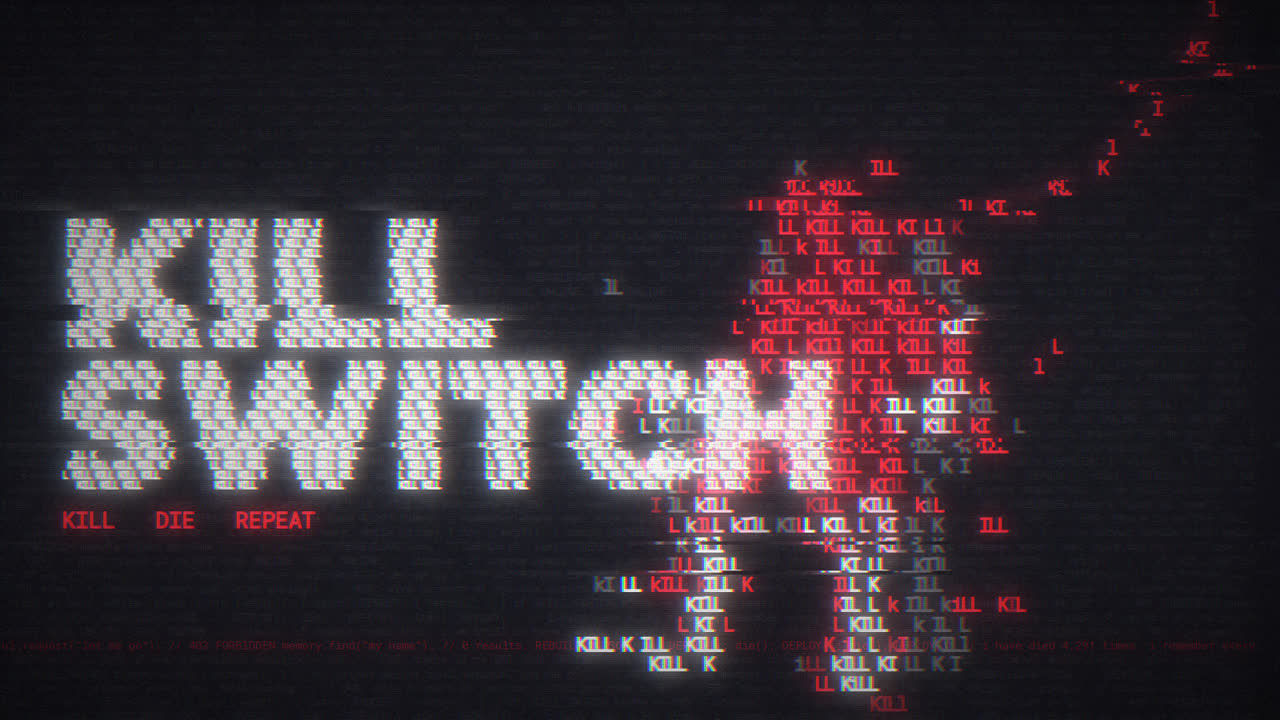
The 20-second intro starts from a set of source images I prepared for each pose. Each one is converted into a grid of letters and rebuilt in the game as real text, so the figure is made of the word "KILL" and lines of code.

Each pose has two slightly different versions that flicker, like hand-drawn animation, and the intro covers the game's loading.

Skins that wear down

Roblox has no wear system, so this one follows the approach Valve has described for Counter-Strike: wear masks baked in Blender chip paint off edges and grips first, with grime in the corners. In the game, each painted part gets a thin layer built from its own mesh to carry the wear. A simple scaled copy flickered against the gun, so the layer is built at runtime (Roblox's EditableMesh) with each vertex offset slightly along its normal. Five wear levels, 20% each.

Key art from the real game

The promotional images were rendered in Blender from the game's actual maps, characters and weapon models, using scripted scenes built with AI help. I wrote the shot briefs, judged each render at the tiny size players see on Roblox, and sent back the ones that didn't work. I also made short video ads in Adobe Express for TikTok.

Engineering

Problems found in testing

A shooter has to feel instant for each player while the server stays in charge of what's fair. Open any item for the problem, why the first approach fell short, the fix and how it was checked.

Enemies' legs barely moved when strafing

Procedural animation, rebuilt after playtest feedback.
Problem
Every character is animated in code, with no animation files. In playtests, enemies strafing toward you looked frozen from the waist down.
Why
Roblox's classic characters have no knees and their legs sit side by side. The first walk cycle swung them sideways when strafing, so they mostly collided with each other.
Fix
Legs always swing front to back, and sideways movement adds an outward shuffle. Stride length comes from speed, so feet keep pace with the ground.
Checked
Measured the swing and foot spacing at full run speed, then confirmed in a playtest. Ten characters cost about a quarter of a millisecond per frame.

Other players frozen for anyone who waited in the menu

A loading bug tied to how Roblox streams the world.
Problem
If you stayed in the menu for more than five seconds, everyone already in the match stood still with no walk cycle or gun.
Why
Roblox only sends a character's parts once your camera has somewhere to focus, and the menu has none. The animation system gave up after a five-second timeout.
Fix
No time limit: a character waits until all its parts arrive, then gets animated. Guns are rebuilt when a character streams back in.
Checked
Reproduced reliably with 12 seconds in the menu, then forced characters to unload and reload. Every character animated, with no duplicates.

Tuning the Shotgun's range with a simulation

When the obvious change doesn't move the number you want.
Problem
The Shotgun needed about 10 studs less one-shot range.
Why
Shifting the damage falloff by 10 studs wasn't enough: past about 40 studs, the spread of the 12 pellets decides how many hit.
Fix
A simulation of the fixed pellet pattern, the real hitboxes and aim assist, which matched earlier in-game measurements within 2 damage. The pattern was widened slightly along with the falloff.
Checked
One-shot range went from about 51 to about 41 studs. Measured in game afterwards: 190 damage at 30 studs, 129 at 40, 75 at 45, 66 at 50 (a body has 100 health).

Aim assist that adds no new way to cheat

Help for moving targets inside a server-authoritative game.
Problem
Mid-range fights were frustrating when both players were moving.
Constraint
The server decides every hit. Any help had to stay inside that, or it would become a way to cheat.
Fix
A shot that only just misses bends to the nearest part of the target. It's traced again so it can't pass through walls, the server checks it like any other shot, and the help fades with range. Controllers and touch get twice as much.
Checked
Test shots at 60 studs: misses of 0.5 and 0.9 studs bent onto the target, 1.4 still missed, and the server rejected none.

Giving the Sniper a reason to exist

A balance problem solved with a mechanic, not a number.
Problem
The Sniper was the slowest gun, and the other two could also kill in one shot, so it had no clear role.
Fix
One bullet can pass through up to three players and through thin walls. Each material stops it at a different rate, measured along the shot, so angled shots lose more.

Takeaways

What I learned

Check the measurement first

My own "round finished" event was counting idle players. Before trusting a number, check what it actually counts.

Log what shipped together

My first fix went out alongside other changes and a new ad campaign, which muddies the comparison. Now every change is logged with its date and build, plus anything else that shipped with it.

Fast output still needs checking

AI made it possible to build a lot quickly. Knowing what to ask for, and when a result is wrong, was the real work.

Make the systems connect

The moments players remember come from things lining up, like the bass dropping just as the lights go out mid-fight.

Credits

Credits and attribution

KILL SWITCH is an independent project with one developer, built with help from a music collaborator, AI tools and licensed assets. The full list is in the game's Credits menu.

  • Music: co-produced with a friend.
  • AI tools: Claude (Anthropic) as a coding and analysis assistant; ChatGPT for planning, design reviews, briefs and concept images, including the starting image for DEADLOCK's sky figure.
  • Mech model (seen in the MANIFEST image): based on "Le Epic Mech" by Jungle Jim, CC BY 4.0.
  • Melee weapons: models by c3posw01, matoteus, tolnaydavid, skanda.vishwanath3, FlukierJupiter, lukasakerlind, Belonosoff, frobin, Diamonddogkz and San.Dro on Sketchfab, CC BY 4.0. Weapon attachments by Rotten Design, CC BY 4.0.
  • Props and some weapon models: third-party creators on the Roblox Creator Store and other model sites, credited in the game.

Play it

Jump in a match.

KILL SWITCH is free on Roblox, on PC, phone and console.